
ITRADE works with STEM organizations to close Technology, Talent, & Security gaps. See how →
| The Lead |
In November 2022, Jake Moffatt's grandmother died, and he went to Air Canada's website to book a flight to the funeral. The airline's chatbot told him he could buy a full-fare ticket and apply for the bereavement rate within 90 days. He did. Air Canada then turned down the refund, because its written policy required the request before travel. When Moffatt took the case to British Columbia's Civil Resolution Tribunal, the airline suggested the chatbot was a separate legal entity responsible for its own actions. Tribunal member Christopher Rivers called that “a remarkable submission.” In February 2024 he ordered Air Canada to pay C$650.88 in damages, writing that “it should be obvious to Air Canada that it is responsible for all the information on its website” (Moffatt v. Air Canada, 2024 BCCRT 149).
The dollar amount was small. The principle applies to every company that puts AI in front of a customer: when software speaks or acts for the business, the business owns the result.
That principle is about to carry much more weight. Chatbots answer questions. Agents take actions: they book, buy, file, schedule and approve. McKinsey's State of AI 2026 survey, published in August, found that 40% of respondents at organizations with more than $1 billion in revenue are scaling AI agents, up from 27% a year earlier. Among smaller organizations the share held at 22%. Adoption is still early enough that the rules can be set before the agents multiply.
The same ruling, three sectors
Legal. In June 2023, Judge P. Kevin Castel of the Southern District of New York fined two attorneys and their firm $5,000 in Mata v. Avianca. Their brief cited court decisions that ChatGPT had invented. The tool wrote the citations, and the lawyers who signed the filing answered for them.
Healthcare. In September 2024, the Texas Attorney General settled with Pieces Technologies, a Dallas company whose generative AI summarized patients' conditions for staff at at least four major Texas hospitals. The state's investigation found that the company's advertised “severe hallucination rate” of “<1 per 100,000” was likely inaccurate. Pieces agreed to disclose its accuracy plainly and to make sure clinicians understand how far they can rely on its output. The FDA lists more than 1,600 AI-enabled medical devices authorized for the U.S. market as of September 2026, so hospital review boards will see this question again and again.
Customer service, everywhere. The Air Canada exposure sits inside a carrier's assistant quoting delivery windows, a bank's chatbot explaining fee waivers, and a utility's virtual agent handling outage credits. Each answer reads to the customer as company policy.
Where governance stands
Deloitte's State of AI in the Enterprise 2026 found that close to three-quarters of companies plan to deploy agentic AI within two years. KPMG's Q3 2026 AI Pulse, fielded this summer, shows leaders starting to draw lines: 49% have defined high-risk use cases that require a human decision, up from 28% a year earlier. Ownership is the cheapest control to put in place, and it gets cheaper the earlier it happens. NIST's AI Risk Management Framework (AI RMF 1.0) gives teams a shared vocabulary for the work in four functions: Govern, Map, Measure and Manage.
What to do Monday morning
- List every bot and agent that speaks or acts for the company, including the ones built into vendor software.
- Give each one a named human owner who answers for its output.
- Check its answers against current policy before customers find the gaps.
- Put its limits in writing: what it can promise, spend or approve, and when it hands off to a person.
When software speaks or acts for the business, the business owns the result.
| Signals · This Week in STEM |


|
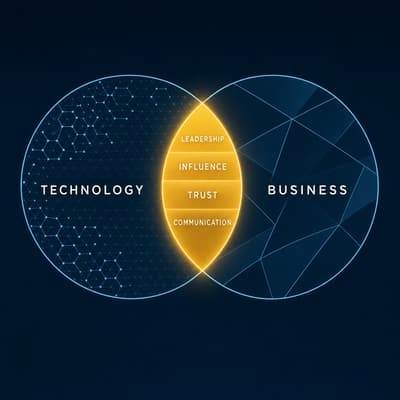
Workshop Wednesday: Influencing, Communication & Foundations for Success
Wednesday, November 18 · 12:00-1:00 PM · Virtual
Register
|
Bianca architects the systems most leaders buy in pieces - talent, technology, and security, designed to work as one.